Chart patterns · Free guide
It worked in the course. On your chart, it snapped back.
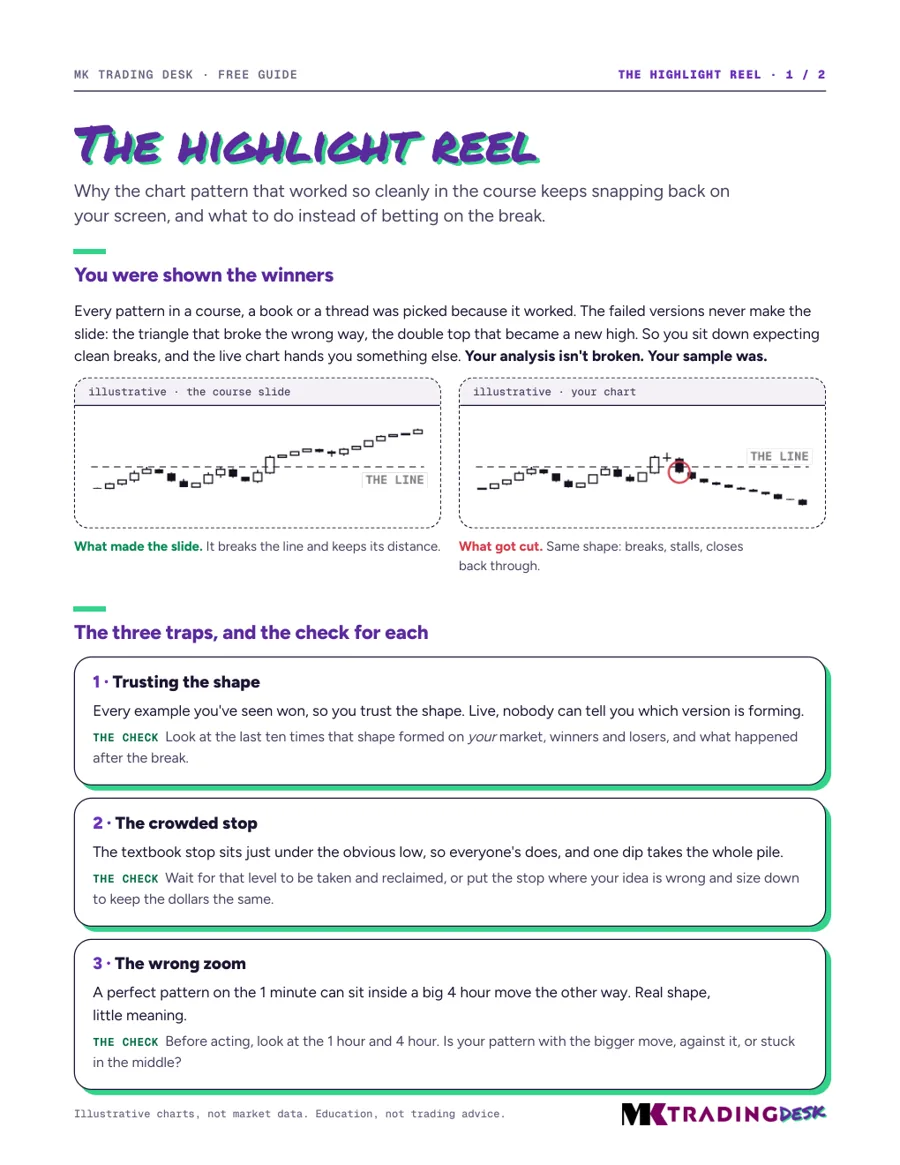
Every chart pattern you were taught came from a highlight reel. Here are the three traps that follow from it, and the fix that stops you betting on the break.
You were shown the winners
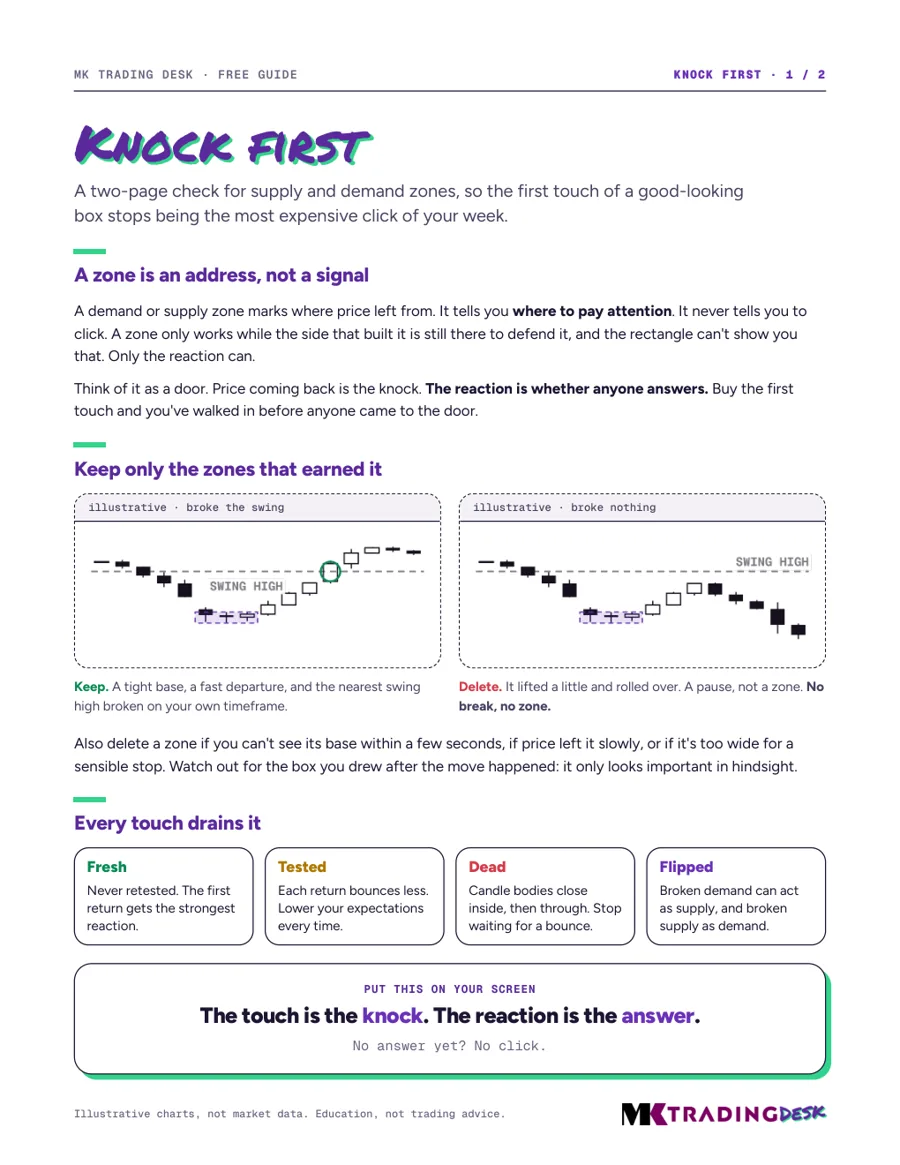
Every pattern in a course, a book or a thread was picked because it worked. The failed versions never make the slide: the triangle that broke the wrong way, the double top that turned into a new high. So you sit down expecting clean breaks, and the live chart hands you something else.
Your analysis isn't broken. Your sample was. That one gap sets three traps, and they work together.
Trap 1: Trusting the shape
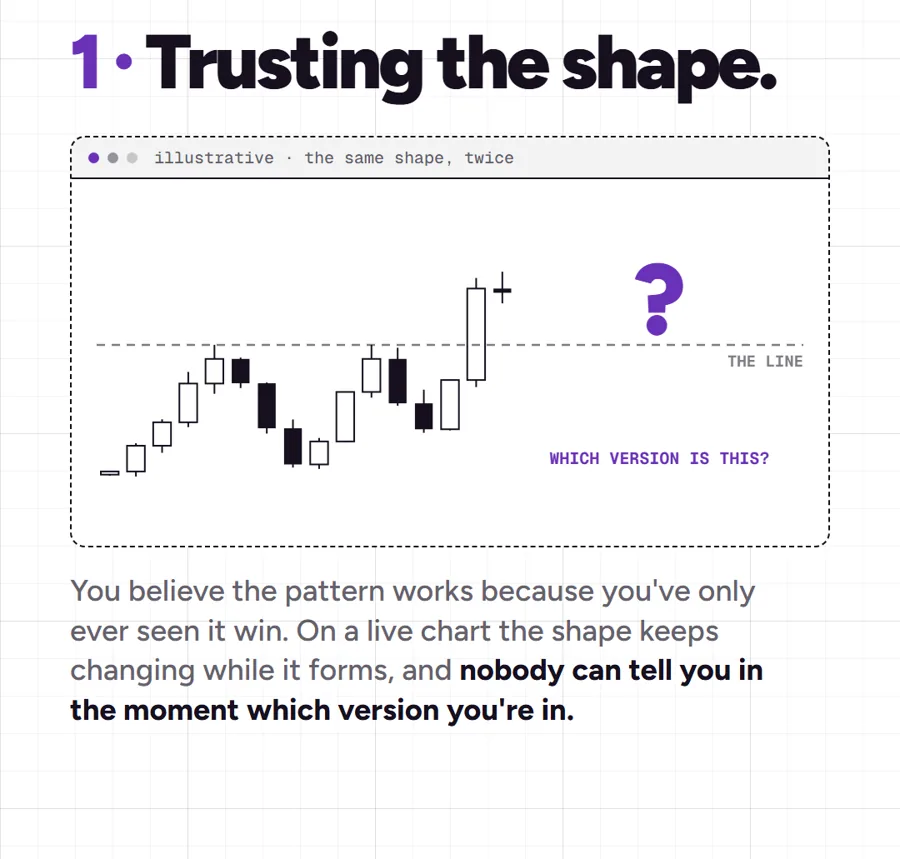
Every example you've seen won, so you trust the shape. Live, nobody can tell you which version is forming while it forms.
The check: find the last ten times that shape formed on your market, winners and losers, and write down what happened after the break.
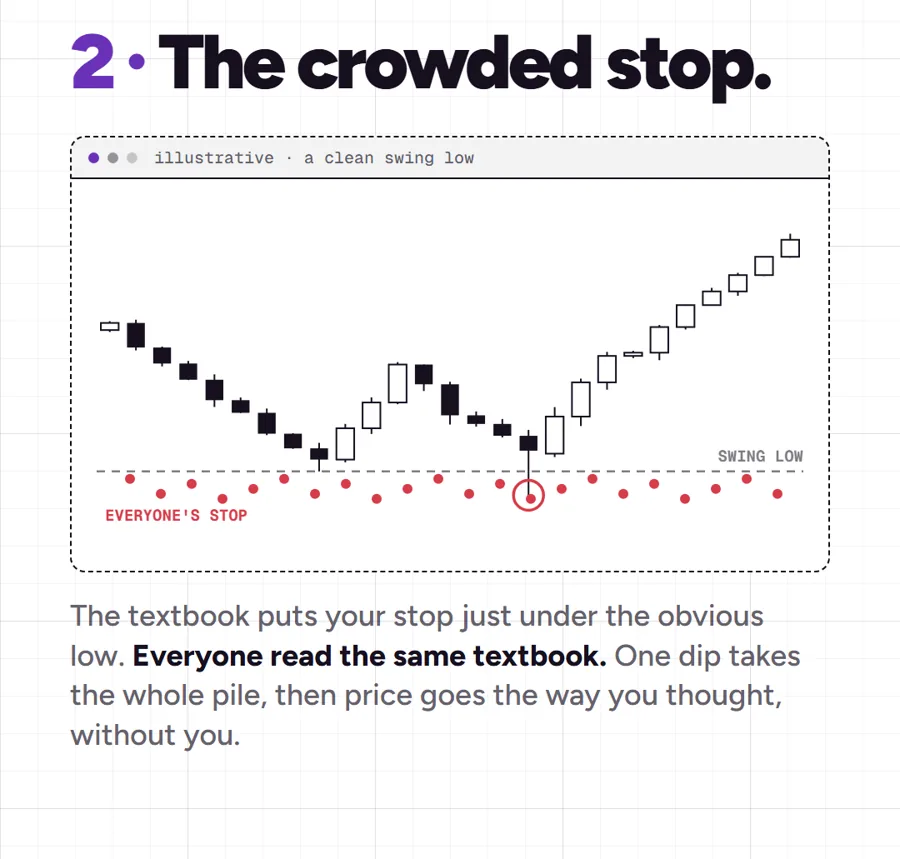
Trap 2: The crowded stop
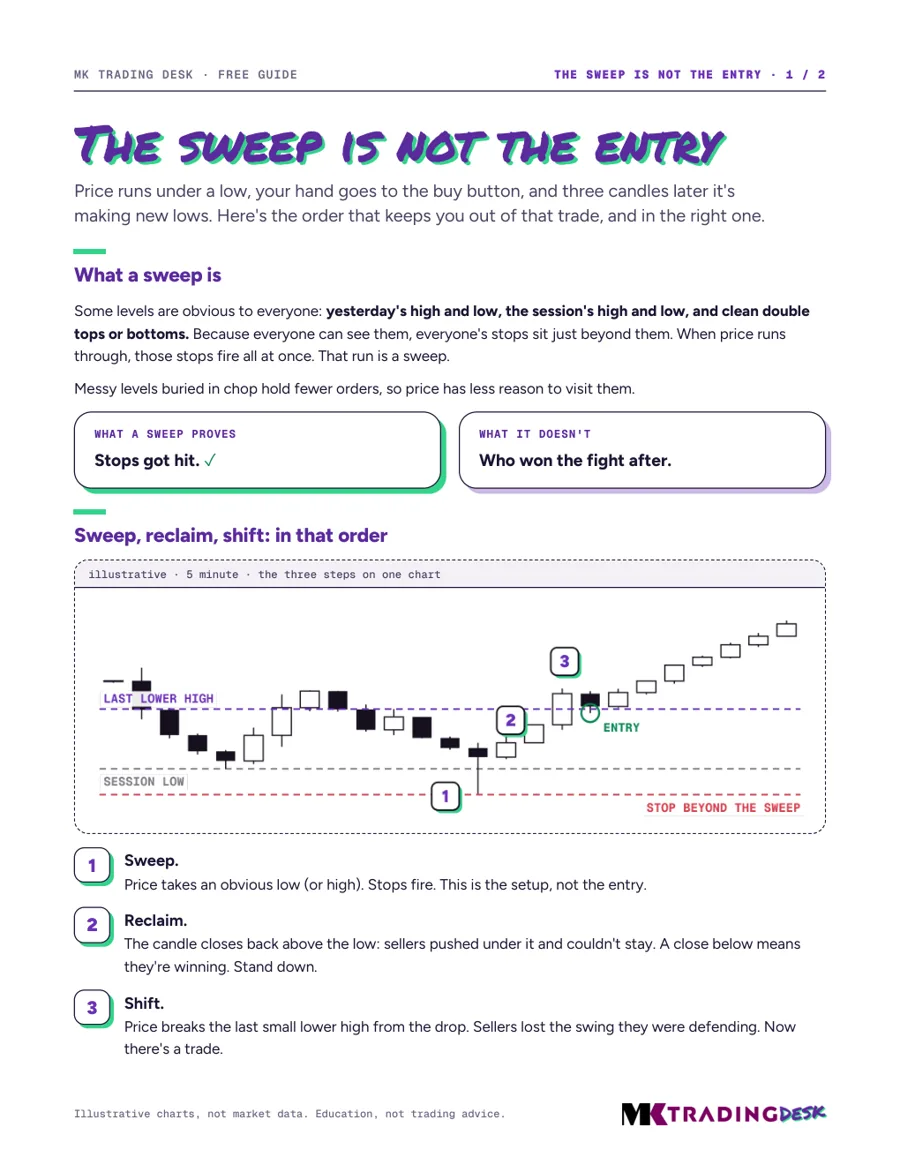
The textbook stop sits just under the obvious low, so everyone's does. One dip takes the whole pile, then price goes the way you thought, without you.
The check: wait for that level to be taken and reclaimed. Or put the stop where your idea is actually wrong and trade smaller, so the dollars at risk stay the same.
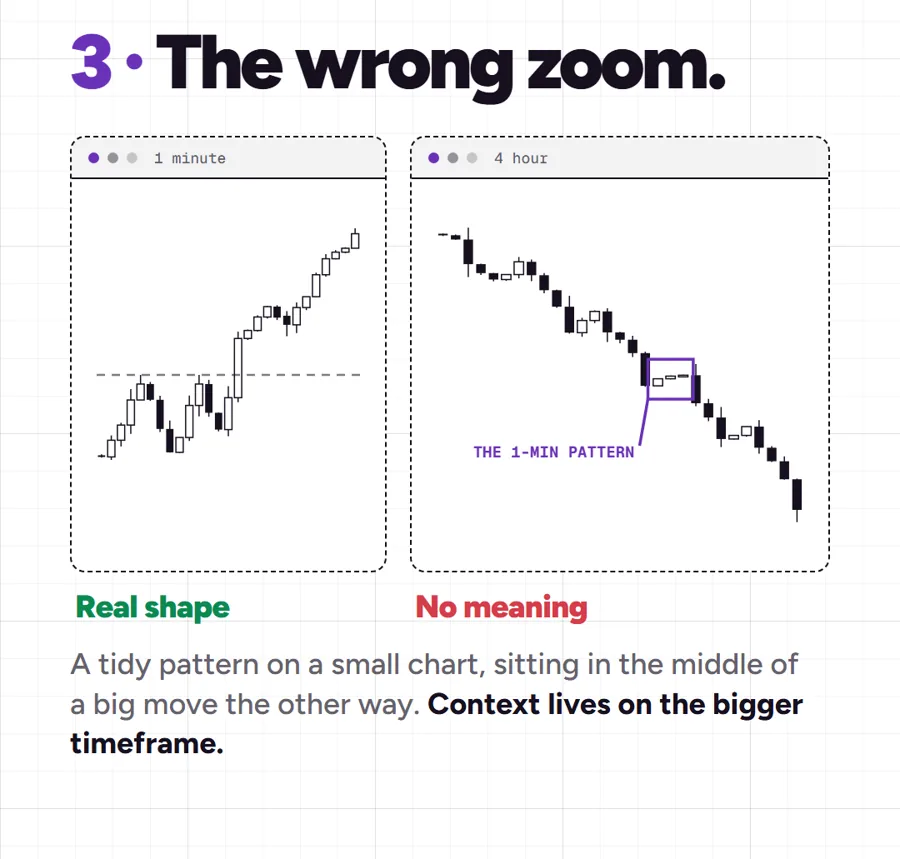
Trap 3: The wrong zoom
A perfect pattern on the 1 minute chart can sit inside a big 4 hour move the other way. Real shape, little meaning.
The check: before acting, look at the 1 hour and the 4 hour. Is your pattern with the bigger move, against it, or stuck in the middle?
The fix: let it break without you
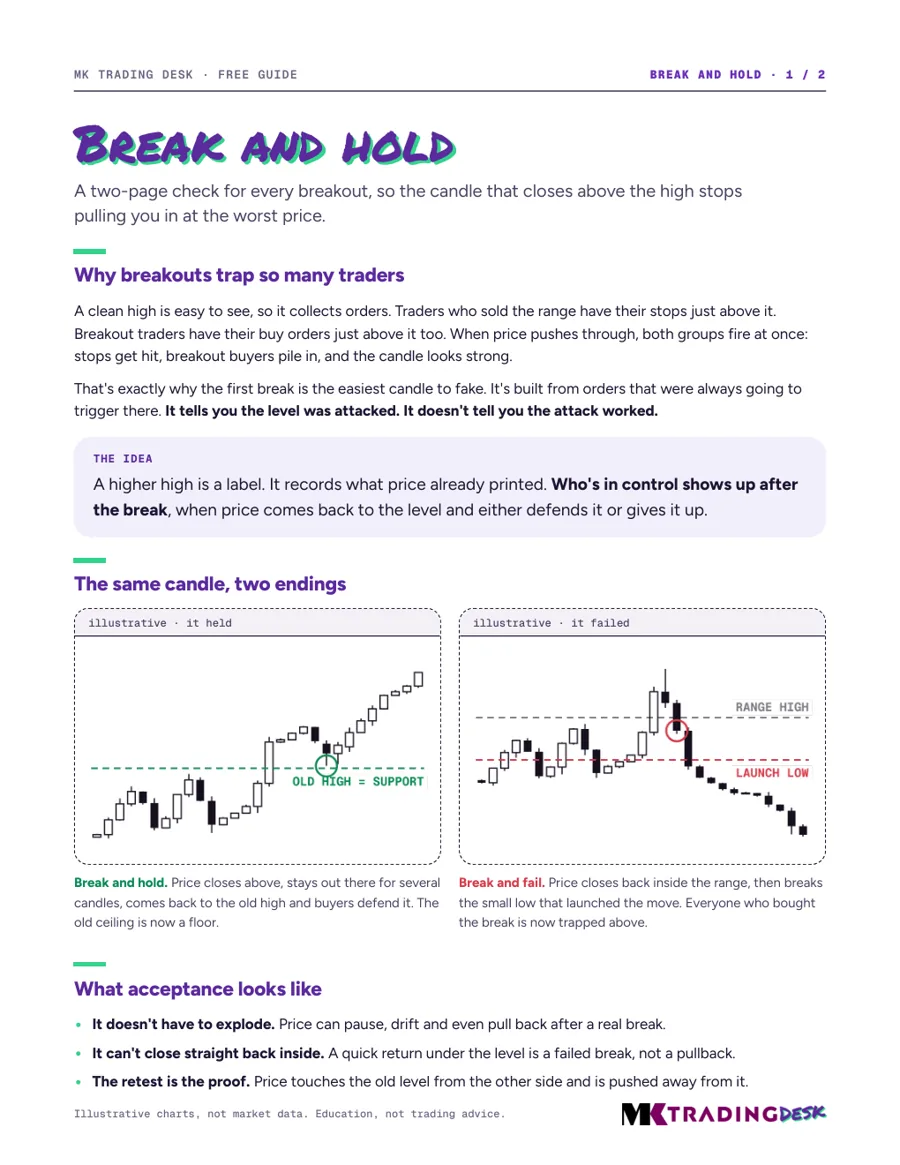
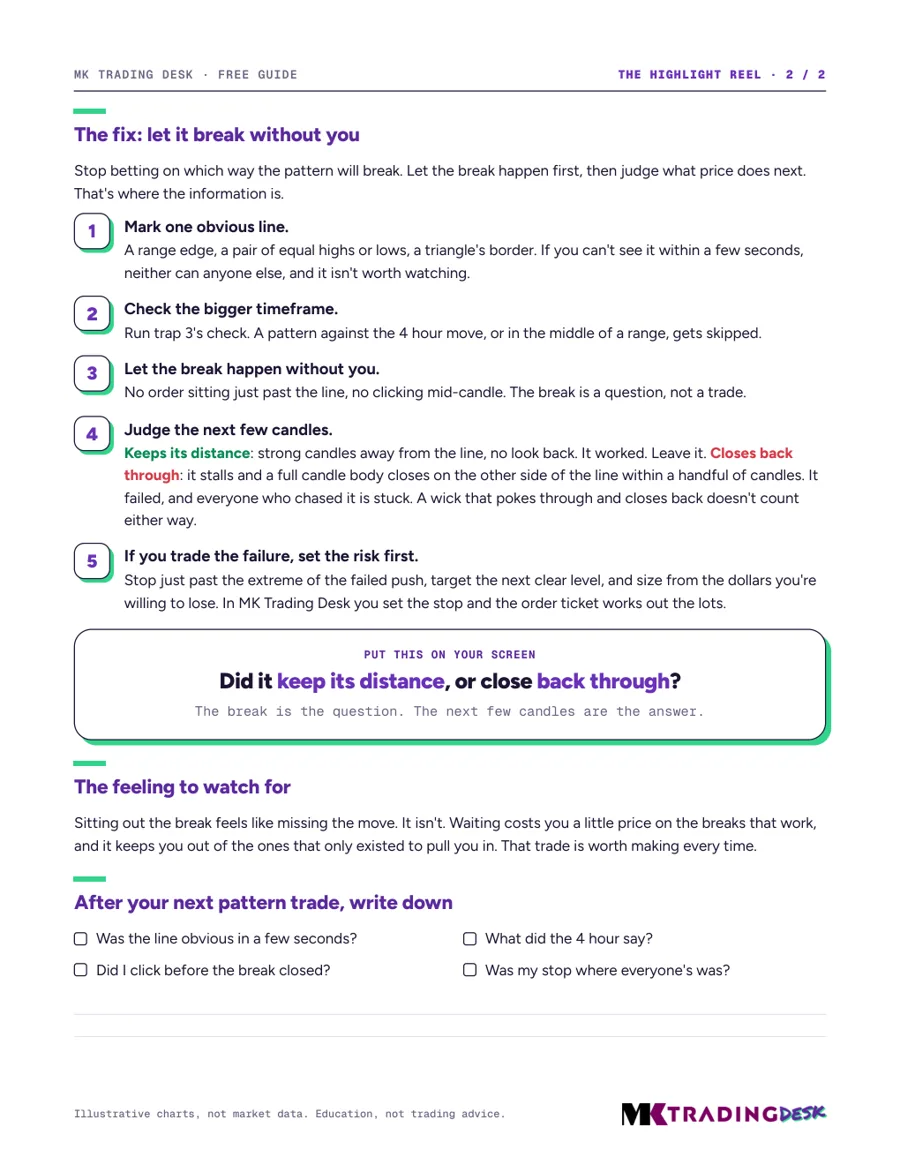
Stop betting on which way the pattern will break. Let the break happen first, then judge what price does next. That's where the information is.
- Mark one obvious line. A range edge, equal highs or lows, a triangle's border. If you can't see it within a few seconds, neither can anyone else.
- Check the bigger timeframe. A pattern against the 4 hour move, or in the middle of a range, gets skipped.
- Let the break happen without you. No order sitting just past the line, no clicking mid-candle.
- Judge the next few candles. Strong candles that keep their distance mean it worked: leave it. A full candle body closing back through the line means it failed, and everyone who chased it is stuck.
- If you trade the failure, set the risk first. Stop just past the extreme of the failed push, target the next clear level. Size from the dollars you're willing to lose, never from a feeling. MK Trading Desk does that math for you: set the stop and the order ticket works out the lots.
The break is the question. The next few candles are the answer.
The feeling to watch for
Sitting out the break feels like missing the move. It isn't. Waiting costs you a little price on the breaks that work, and keeps you out of the ones that only existed to pull you in.
Free PDF · 2 pages
Get the three traps and the fix
Every trap with the check that beats it, and the routine for any pattern, on two pages.
- Each trap, and the check that beats it
- The five-step routine for any pattern
- A one-question card for your screen
- Four questions for your journal
Your guide is downloading.
Didn't start? Download it here (the link works for five minutes). Print the two pages and keep them beside your chart.